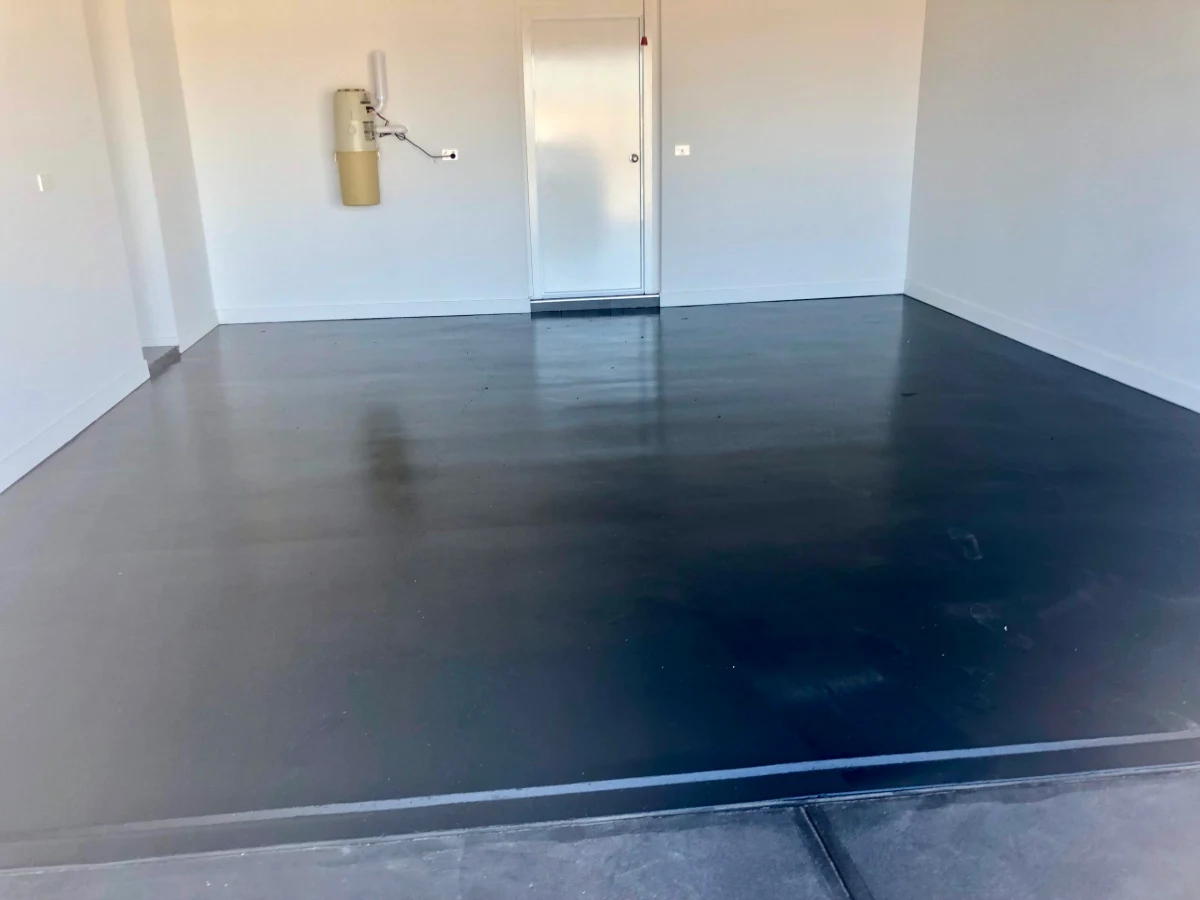
What's included in our epoxy flooring service
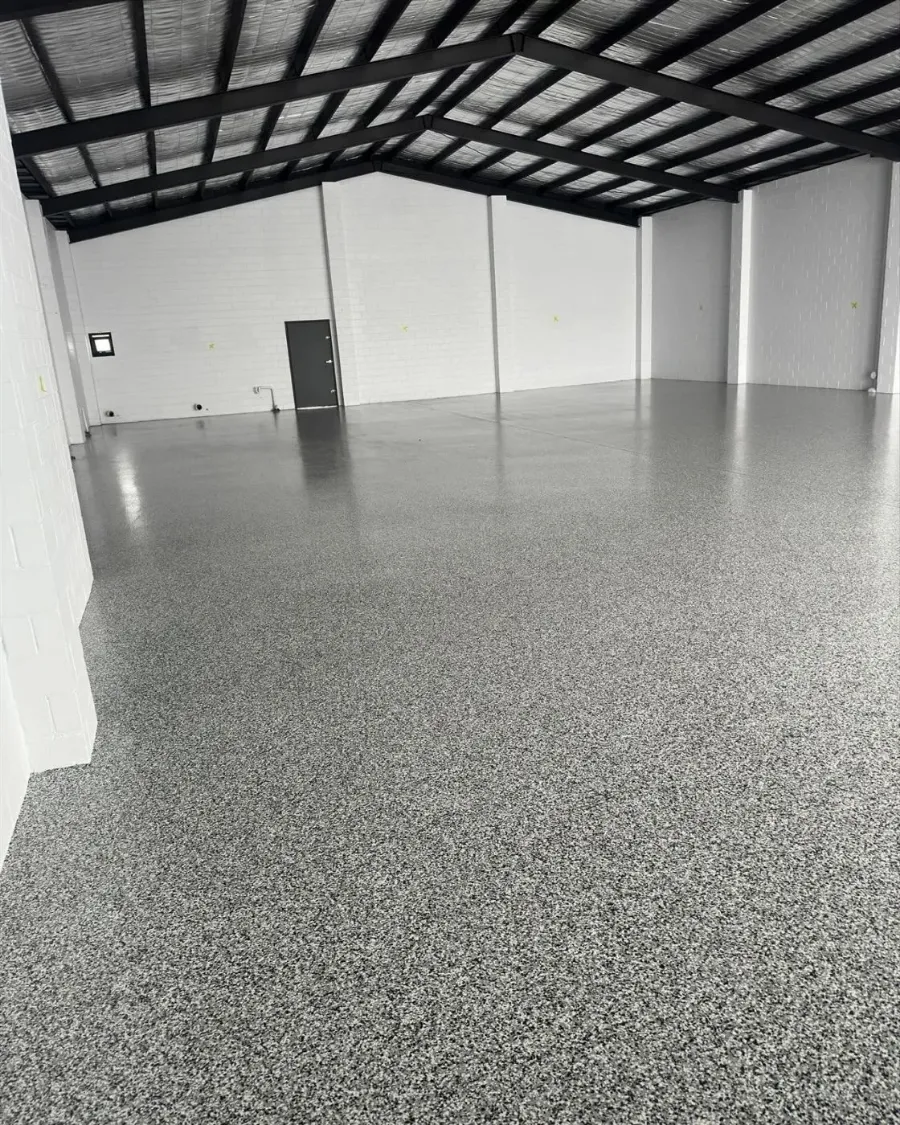
Decorative epoxy flake
Vinyl flake broadcast into the base coat and sealed under a clear topcoat, from subtle grey blends to high-contrast black and white.
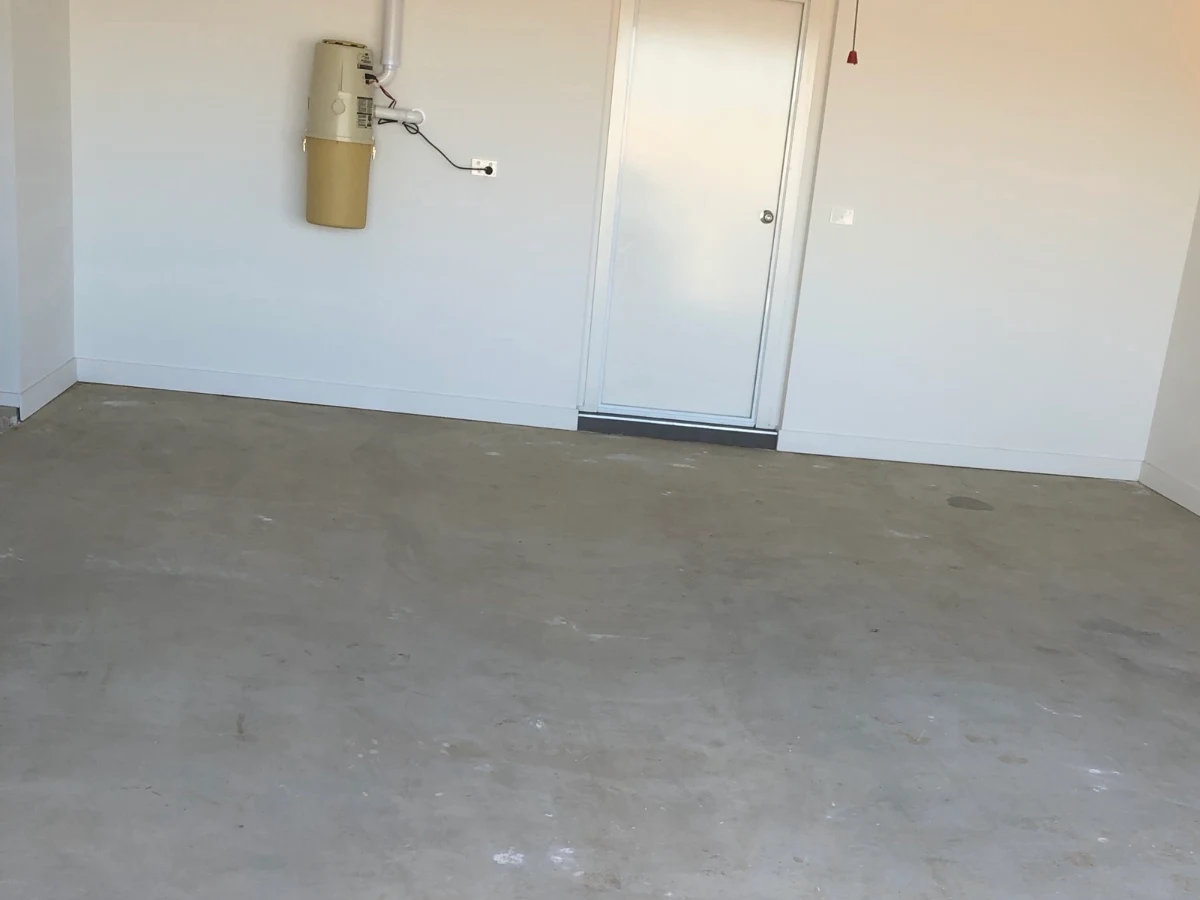
Garage floor coatings
Stained, dusty domestic slabs turned into a finished floor that stops shedding concrete dust onto everything stored on it.
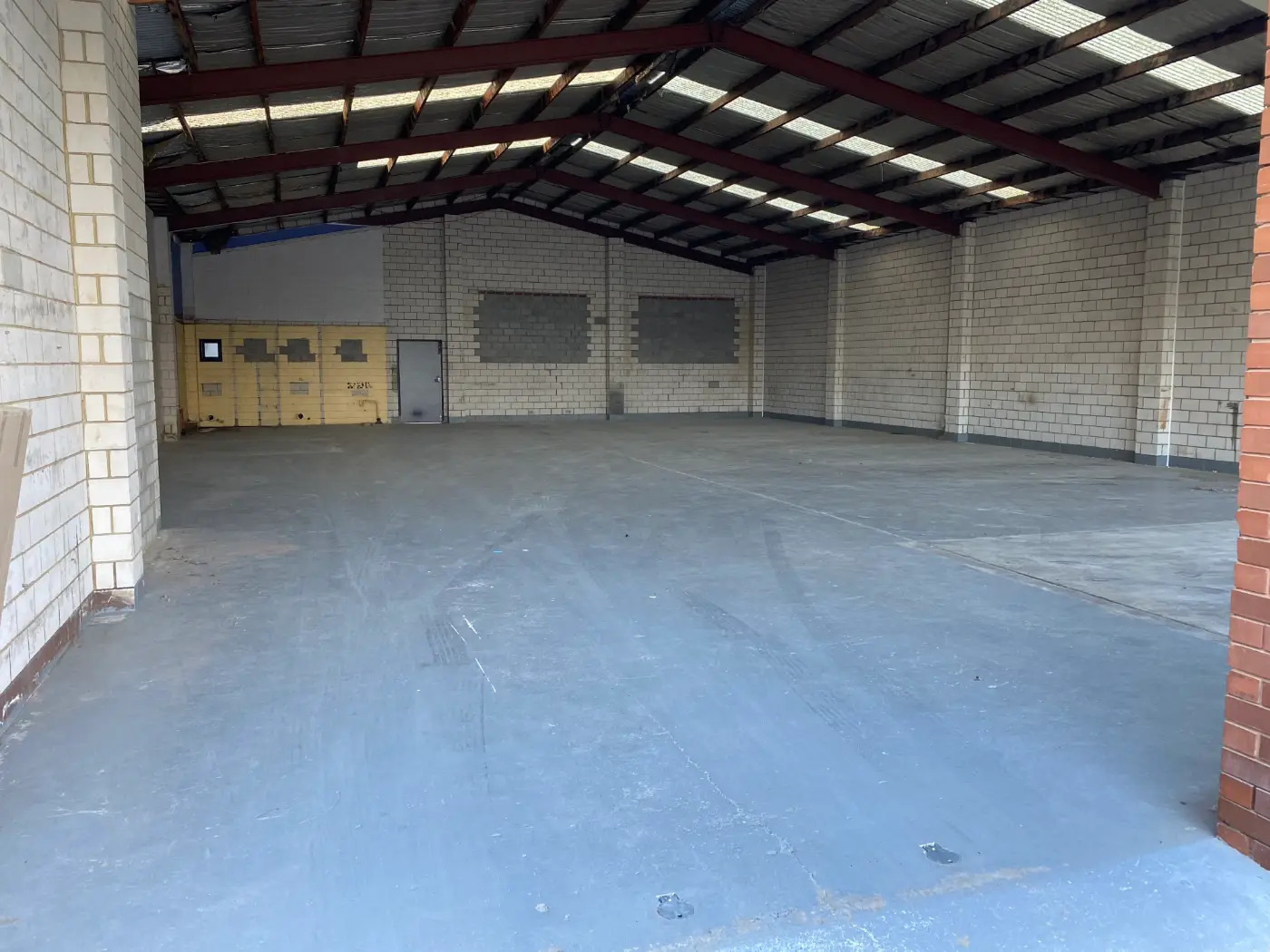
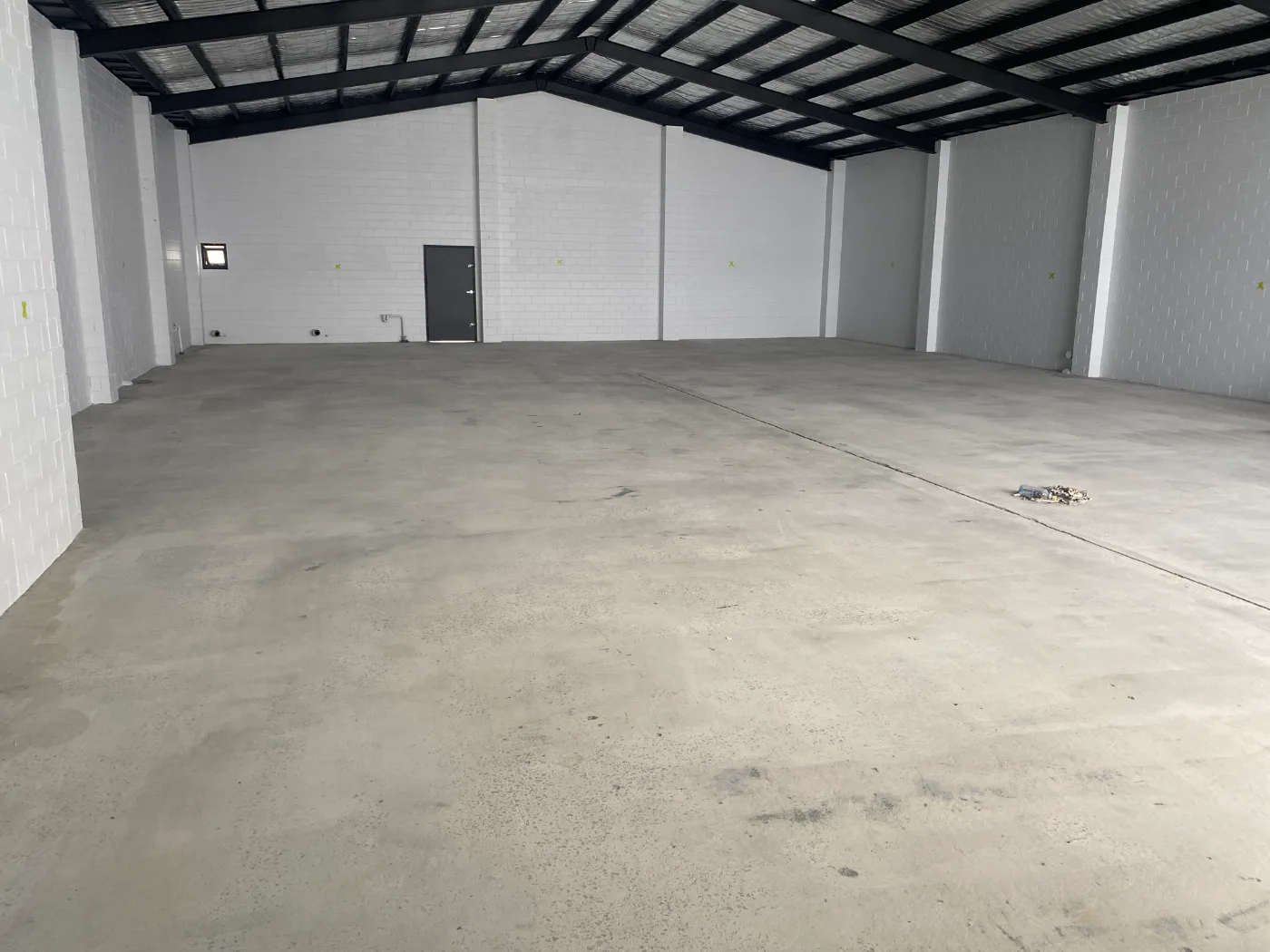
Warehouse and commercial floors
Staged around a business that keeps operating, section by section, with cure times protected from traffic.
Concrete resurfacing
Spalled, pitted or repeatedly patched surfaces made good first, so the new finish doesn't just follow the damage underneath.
Why Melbourne chooses Jetblack Painting for epoxy flooring
Jetblack Painting coats and resurfaces concrete floors across Melbourne — decorative flake finishes, solid colour coatings and clear-sealed concrete, in everything from single domestic garages to full warehouse floors. It's the same trade discipline as the rest of our work: the finish people see is the last few hours of the job, and the preparation underneath it is the part that decides how long it lasts.
Jetblack Painting is a 5-star rated Melbourne business with 18 years of experience, $10 million public liability insurance, and a 5-year workmanship guarantee on every project.
Preparation Is the Whole Job
Almost every failed garage floor you've seen — the coating lifting in sheets, peeling away where the tyres sit — failed for the same reason. It was rolled onto smooth concrete that was never opened up first. Bare slabs have a dense, closed surface layer, and a coating applied straight onto it is holding on by very little. Heat, moisture and a turning tyre are enough to break that bond.
Mechanical preparation solves it by removing that layer entirely, along with old paint, sealers, glue residue and surface staining, and leaving a profile the first coat can key into. This is also the stage that exposes what the floor is actually like underneath. Cracks hidden under dirt, patches of previous repair, soft or crumbling areas, old oil soaked into the slab — all of it surfaces at this stage. Every one of them needs dealing with before a coating goes anywhere near the floor.
Moisture is the one that catches people out. Concrete sitting on ground without an effective vapour barrier can push moisture up through the slab, and that pressure will lift a coating from below no matter how well the surface was prepared. It's checked before quoting, because it changes which system is appropriate — and occasionally it's the reason we say a floor isn't a good candidate at all, which is better said before the job than discovered after it.
Flake, Solid Colour and Sealed Concrete
A decorative flake floor is built in layers. A base coat goes down, vinyl flakes are broadcast into it while it's still wet, and once cured the excess is scraped back and the floor is sealed under a clear topcoat. The flake is doing more than decoration — it hides the everyday marking that shows up mercilessly on a plain floor, and it builds texture into the surface so the result isn't a sheet of gloss. Flake blends run from subtle grey-on-grey through to high-contrast black and white.
Solid colour coatings suit spaces where the floor should read as one clean surface rather than a decorative feature. Think plant rooms, storage areas and back-of-house commercial spaces. They also suit line-marked areas, where the marking needs to stand out against a plain background. They're also the easier finish to touch in locally later, which matters in a working space that takes knocks.
Clear-sealed concrete is the lightest-touch option: the slab is ground, any repairs made good, and a clear sealer applied so the concrete itself stays visible. It suits polished-look interiors, and spaces where the raw concrete is genuinely part of the design. It is also the option that shows the slab's own history most honestly. Depending on the floor, that is either exactly what you want or exactly what you don't.
Garages, Warehouses and Commercial Floors
A domestic garage is usually the most straightforward version of this work. It is also where the visual difference is starkest. A stained, dusty slab becomes a floor that reads as a finished room rather than a leftover space. Concrete dust is the underrated part: an uncoated slab sheds fine dust continuously onto everything stored on it, and sealing the surface stops that at the source.
Warehouse and workshop floors are a different problem, and it's rarely the coating itself. It's staging. The floor has to come out of service in sections, so the business keeps operating. Stock and racking have to be moved and moved back. Each section needs its cure time protected from foot and vehicle traffic before the next one starts. That planning is the part worth getting right at the quote, because a schedule that ignores it costs the business more than the floor does.
Retail and showroom floors add appearance to the same equation. The finish is on display rather than just underfoot, joins between sections need to fall where they won't be noticed, and the work usually has to happen outside trading hours. We agree the staging and the access arrangements in writing before starting, so nobody discovers on the morning that the shop can't open.
Epoxy Flooring FAQs
What is epoxy flake flooring?
Epoxy flake flooring is a layered floor coating with decorative vinyl flakes broadcast into it, then sealed under a clear topcoat. The flake does two jobs at once — it gives the floor its speckled, terrazzo-like appearance, and it builds texture into the surface so the finished floor isn't a flat sheet of gloss. It's the finish most people picture when they think of a modern garage or showroom floor.
Can you coat an existing concrete slab, or does it need replacing?
Most existing slabs can be coated. Age, stains and old paint are usually not the problem people expect — grinding removes the surface layer along with them. What does need assessing first is structural cracking, moisture coming up through the slab, and whether the concrete was previously sealed, because those change the preparation and sometimes the coating system. We check all three before quoting rather than after starting.
Why does the floor have to be ground before coating?
Grinding is what makes the coating bond to the slab instead of sitting on it. Bare concrete has a smooth, dense surface layer, and any coating rolled straight onto it is relying on grip it doesn't have — which is why cheap garage floor jobs peel up in sheets under a hot tyre. Mechanical preparation opens that surface up so the first coat keys into the concrete itself.
Is an epoxy floor slippery when wet?
A flake floor has texture built into it from the flake itself, which gives it more grip than a smooth gloss coating. Where a floor needs more than that — a workshop that gets wet, a commercial entry, a ramp — an anti-slip additive can be worked into the topcoat. Tell us how the space actually gets used and we'll match the finish to it.
How long before I can walk on it and park on it?
Foot traffic and vehicle traffic return at different times, and both depend on the coating system and the temperature while it cures. Vehicle traffic always waits considerably longer than foot traffic, because a tyre puts far more stress on a coating that hasn't fully hardened than a shoe does. We give you the exact timings for your floor and the conditions on the day as part of the quote, rather than a general figure that may not apply.
What's the difference between epoxy coating and concrete resurfacing?
Coating puts a new wearing surface on top of a sound slab, while resurfacing rebuilds the surface of a slab that's damaged. If the concrete is structurally fine but stained, dusty or tired, a coating is the right answer. If the surface itself is spalling, pitted or has been patched repeatedly, it needs making good before any coating goes on — otherwise the new finish just follows the shape of the damage underneath.
Do you do warehouse and commercial floors as well as domestic garages?
Yes, both. The difference is mostly scale, access and downtime rather than the finish itself — a warehouse floor has to be staged around the business still operating, and a retail or showroom floor usually has to be done outside trading hours. We work to a schedule agreed up front so you know exactly when the space is out of use.
Will the coating hide cracks in my concrete?
The coating will hide fine surface cracking, but it will not fix a moving crack. A crack that's still moving will telegraph straight back through a new coating, sometimes within months, so it has to be cut out and filled properly first rather than coated over. We'd rather point that out at the quote than have it reappear through a finished floor.
Suburbs we service
We provide this service across Melbourne, including these areas.
Related painting services
Explore our other painting services across Melbourne.
Epoxy Flooring work