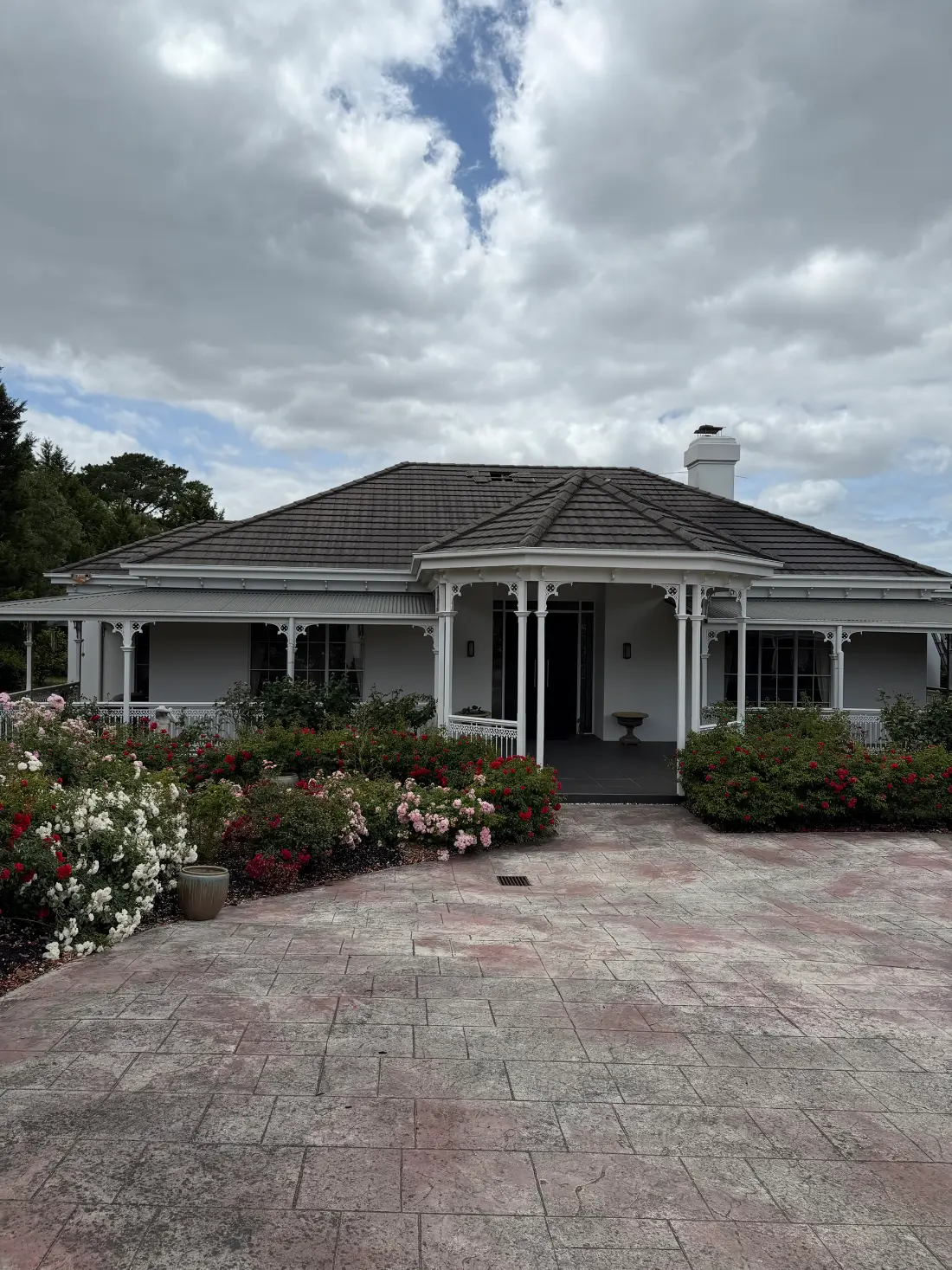
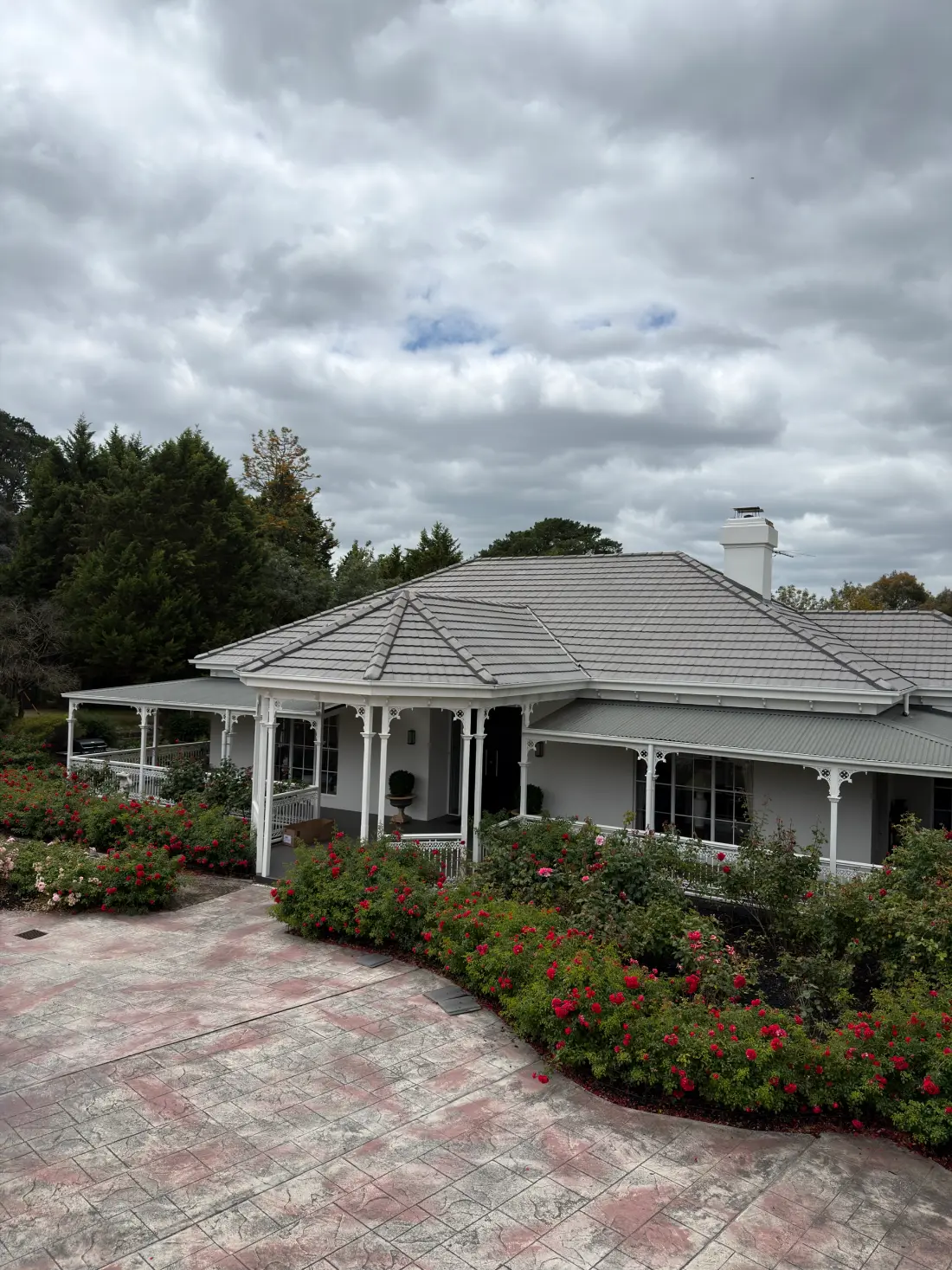
What's included in our roof painting service
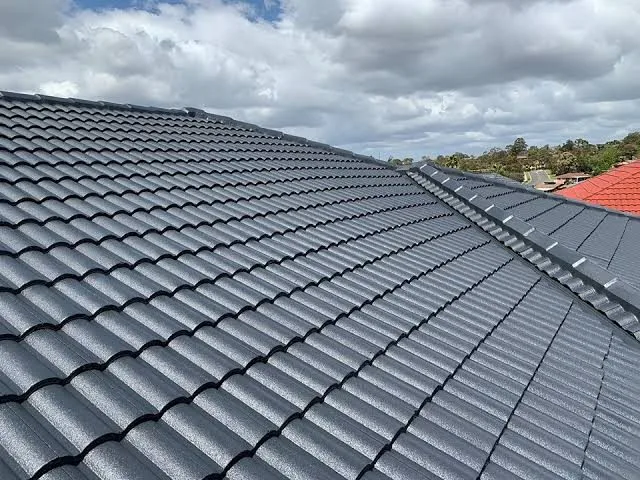
Tile roof restoration
High-pressure cleaning, rebedding and repointing where needed, then primer and flexible membrane topcoats.
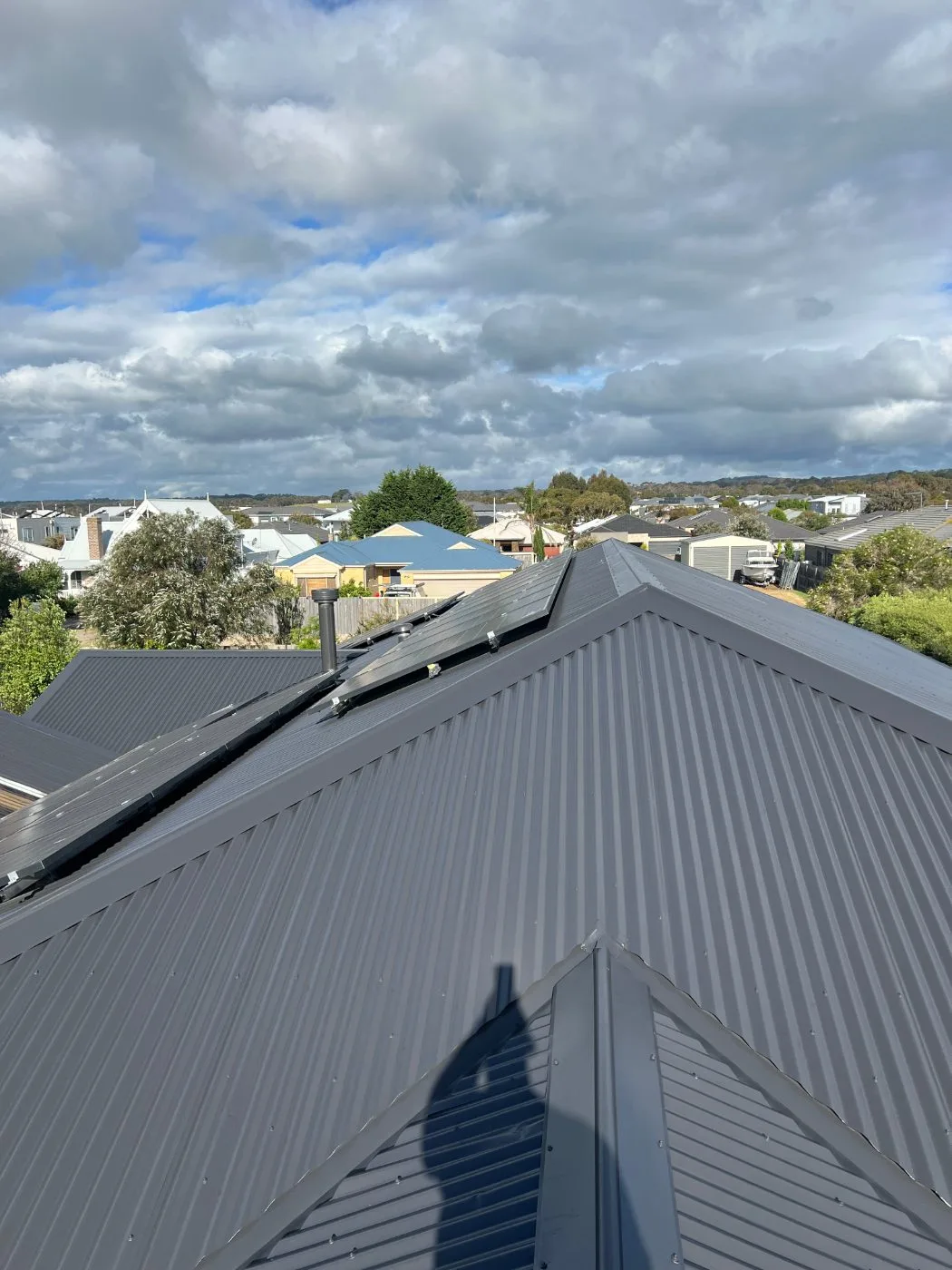
Metal and Colorbond roofs
Rust treatment, priming, and roof-grade coatings that restore colour and protection.
Heat-reflective coatings
Lighter, heat-reflective roof colours that can reduce summer heat load.
Roof inspections and quotes
Honest assessments of whether painting, restoration, or repairs are the right call for your roof.
Why Melbourne chooses Jetblack Painting for roof painting
Roof painting is as much about preparation as paint: thorough cleaning, repairs, and the correct primer are what make the coating system last.
All roof work is completed safely and is covered by our 5-year workmanship guarantee and $10 million public liability insurance.
Tile, metal and cement sheet need different systems
Concrete and terracotta tile is porous. As the original surface treatment wears off, the tile itself starts absorbing water. That is why an unsealed roof gets heavier, dries slower after rain, and grows moss faster every year. Restoring a tile roof means dealing with that porosity directly. A penetrating sealer goes on before the colour coats. The topcoat then sits on a stable surface, instead of soaking straight into bare tile.
Colorbond and Zincalume behave the opposite way — the sheet itself is stable, and failure starts at specific points: screw fixings, cut edges, and valleys where water and leaf litter sit longest. That's where rust treatment is targeted, followed by an etch primer made for galvanised steel before the topcoats go on. A metal roof coated without that step looks fine for a year, then bleeds rust through the new paint at every screw head.
Cement sheet is a third case again. This is the fibre-cement roofing common on older extensions and outbuildings. Like tile, it chalks and becomes porous with age. Unlike tile, it is prone to hairline cracking, so it needs a flexible crack-bridging primer. A rigid one telegraphs every existing crack straight through the new coating.
What roof cleaning and repair actually involves
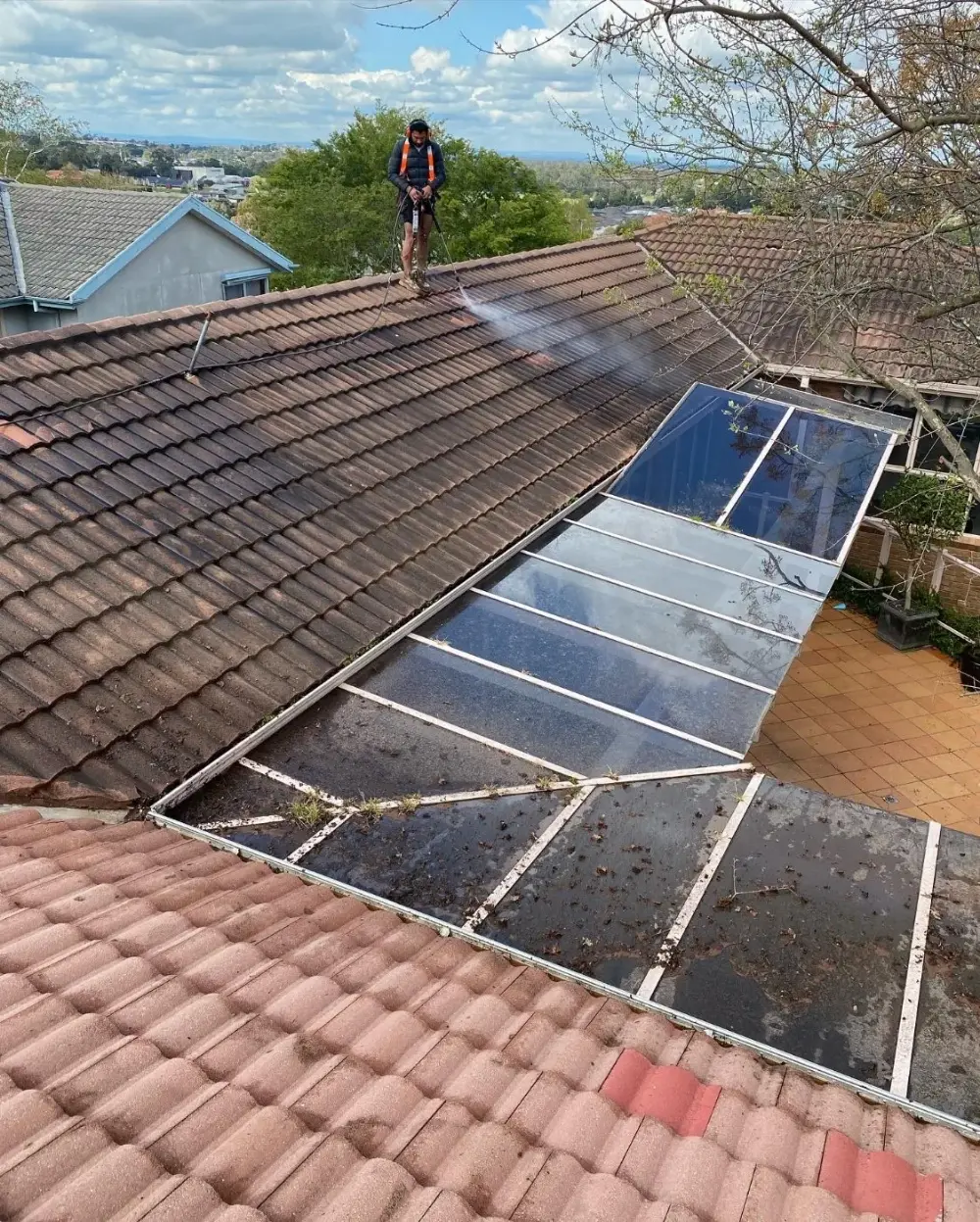
Every job starts with high-pressure cleaning, and it matters more than people expect. Moss, lichen and years of grime sit between the coating and the roof surface. A coating applied over any of that peels away within a season, taking the moss and the paint with it. Cleaning also does the job of revealing what's actually wrong with the roof, which brush-applying paint over a dirty surface would otherwise hide.
On tile roofs, cleaning usually turns up cracked or slipped tiles, and ridge capping where the mortar bedding has failed. Both get fixed before priming starts. A coating is not a structural repair and will not stop a slipped tile leaking. On metal roofs, cleaning is followed by a fixing-by-fixing rust check. Every screw, cut edge and valley is inspected on its own, rather than assessed as one surface. That is genuinely where a metal roof fails first.
This is also the stage where we make the call on whether painting is the right job at all. Extensively cracked tiles, failed capping across large sections, or sheeting rusted through rather than surface-affected are repair problems, not paint problems. Coating over them seals the fault in where nobody can see it. That is worse than leaving it exposed. We say so at the quote stage, before any work is booked.
Membrane coatings and heat-reflective systems
A roof membrane is a different product from a standard exterior paint, not just a heavier-duty version of one. It's a flexible, waterproof coating that moves with the roof as Melbourne's temperature swings expand and contract the surface underneath, rather than cracking the way a rigid film would. It also bridges small surface imperfections — hairline cracks, fine pitting — that a thin topcoat would simply sit on top of and eventually crack along.
What determines how long a membrane system lasts is the applied thickness, not the number of coats. Two thin coats and three thin coats can both fall short of the thickness the manufacturer specifies. We apply to the coating manufacturer's specified thickness, not a fixed number of passes. That is the difference between a roof coating that keeps performing and one that chalks out early.
Heat-reflective coatings work by reflecting more solar radiation than a standard dark roof colour absorbs, which measurably reduces how much heat transfers into the roof cavity below. Lighter colours and purpose-made reflective coatings are worth considering on any north or west-facing roof. They are especially worth it on a roof already due for restoration. The reflective benefit costs nothing extra in preparation, because the roof needs cleaning and coating either way.
Roof Painting FAQs
How long does a professional roof painting last?
How long it lasts depends on the roof's condition and material, how exposed it is, and the coating system used, so we give you an honest expectation for your roof at the quote rather than a stock number. The key is preparation — cleaning, rust treatment, repairs and the right primer — followed by quality membrane or roof coatings applied at the correct thickness. We include all of that in every roof painting quote.
What roof types can you paint?
We paint and restore all common Melbourne roof types, including Colorbond and Zincalume metal roofing, concrete and terracotta tiles, and cement sheet. Each surface needs a specific preparation and coating system, and we match the right one to your roof so the finish bonds properly and lasts.
Can roof painting help keep my home cooler?
Yes. Lighter colours and modern heat-reflective roof coatings can reduce how much heat your roof absorbs, helping keep the home more comfortable in Melbourne summers and easing the load on cooling. We're happy to recommend suitable heat-reflective options during your quote.
Do you repair a roof or just paint over problems?
We assess and repair first. Cracked or slipped tiles, failed ridge capping, rusted-through sheeting and blocked valleys are structural problems, not paint problems, and coating over them just seals the fault in where you can't see it happening. If a roof needs repair work, we say so at the quote rather than after the job has started.
How is a tile roof different from a metal roof to paint?
Tile is porous and metal isn't, so they fail differently and need different systems. Tiles absorb water as their surface wears, so they need a sealer under the topcoat. Metal roofing is different. It is stable across its face and vulnerable at fixings, cut edges and valleys. That is why rust treatment targets those points rather than the whole sheet.
What does the roof cleaning and preparation actually involve?
High-pressure cleaning removes moss, lichen and built-up grime first, because a coating applied over any of that peels within a season. On tile roofs this often reveals cracked or slipped tiles and failed ridge capping that need fixing before anything else happens. On metal roofs it's followed by a rust check at every fixing point, cut edge and valley, since that's where corrosion actually starts.
How does a roof membrane coating work?
A roof membrane is a flexible, waterproof coating, not a standard paint film. It moves with the roof through Melbourne's temperature swings instead of cracking. It also bridges small surface imperfections that a thin topcoat would simply sit on top of. It's applied in multiple coats at a specified thickness, which is what actually determines how many years it lasts, not just how many coats go on.
Suburbs we service
We provide this service across Melbourne, including these areas.
Related painting services
Explore our other painting services across Melbourne.
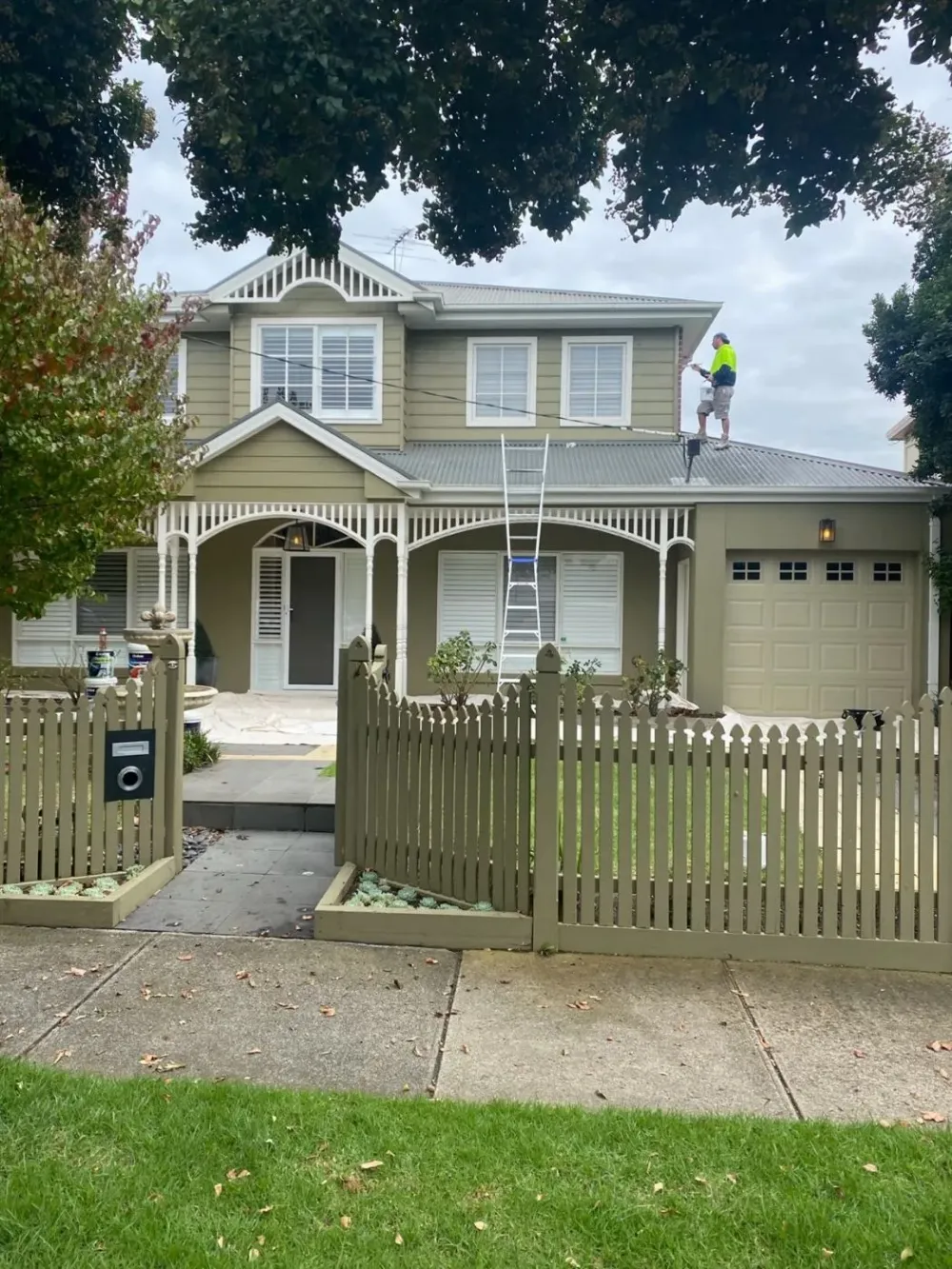
Roof Painting work