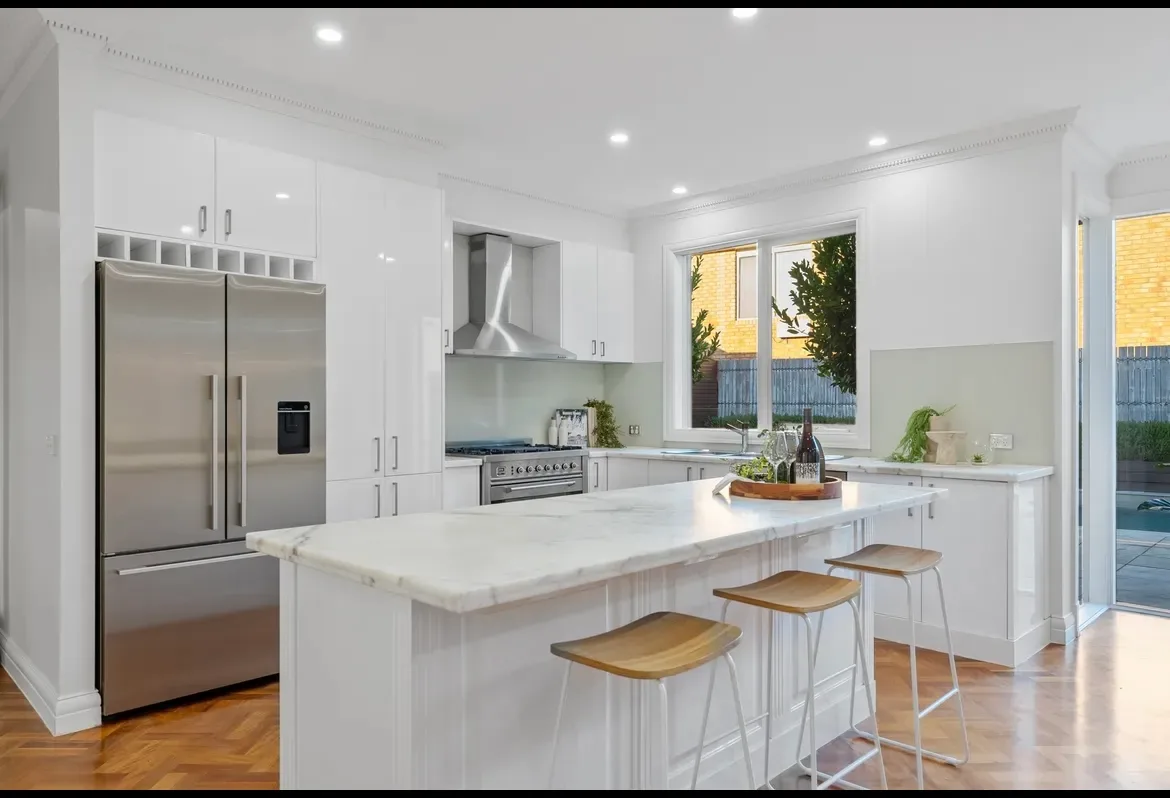
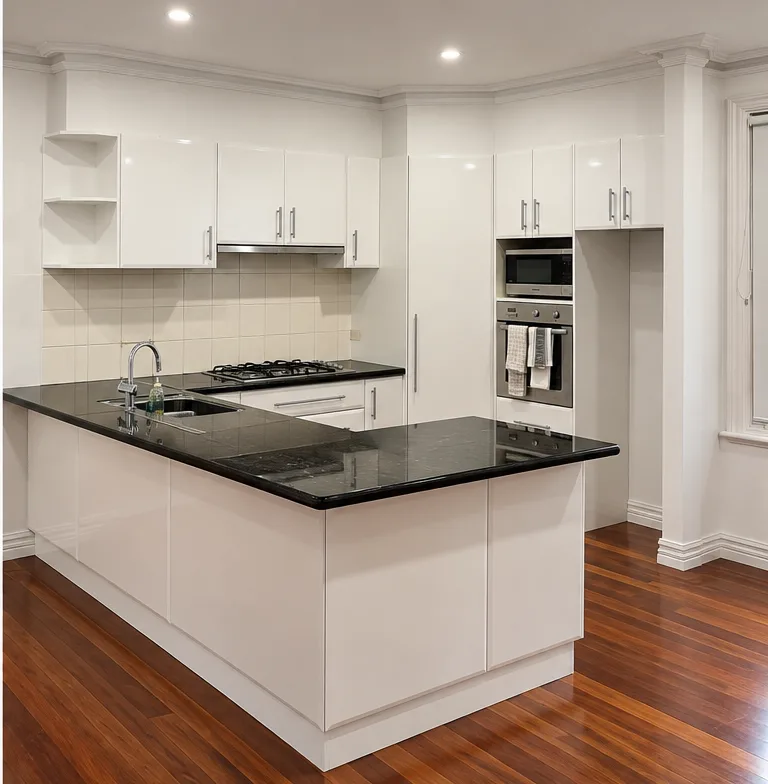
What's included in our kitchen cabinet resurfacing service
2-pack polyurethane finishes
Durable, factory-style 2-pack coatings sprayed for a smooth, hard-wearing finish.
Doors, panels and drawers
Complete resurfacing of cabinet doors, drawer fronts, and end panels in your chosen colour.
Colour transformation
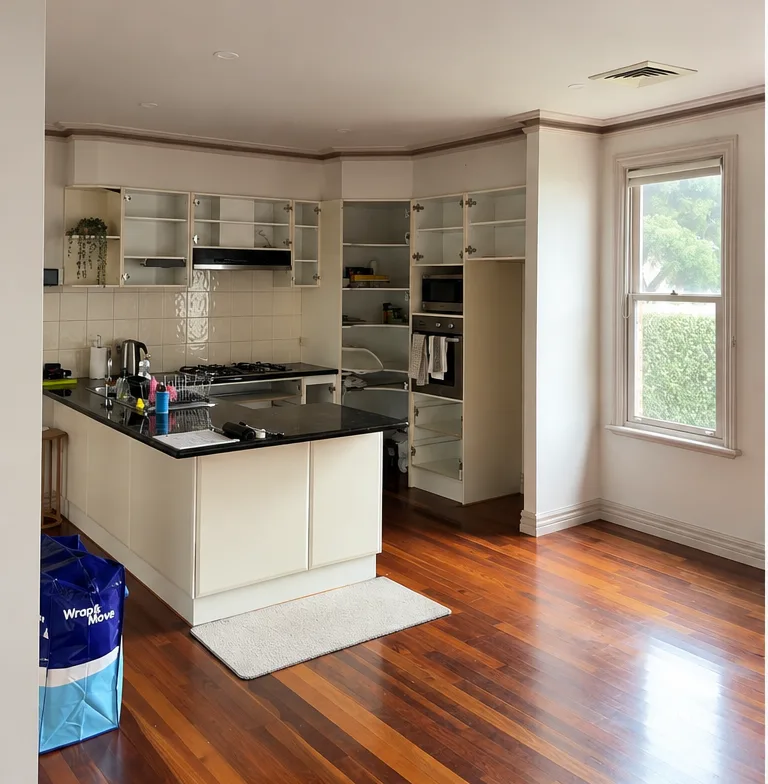
Update dated timber or coloured cabinetry to modern whites, neutrals, or bold feature tones.
Laundry and built-in cabinetry
The same resurfacing process applied to laundries, wardrobes, and built-in units.
Why Melbourne chooses Jetblack Painting for kitchen cabinet resurfacing
Resurfacing keeps your existing kitchen layout and cabinetry carcasses and renews the visible surfaces — typically at a fraction of the cost and downtime of a full renovation.
Surfaces are degreased, sanded, primed, and finished in premium 2-pack systems for a durable, wipeable finish, backed by our 5-year workmanship guarantee.
Which kitchen cabinets can be resurfaced
Most Melbourne kitchens built in the last thirty years can be resurfaced. Laminate and melamine doors, vinyl-wrapped MDF, timber and timber-veneer, and existing 2-pack polyurethane all take a new 2-pack finish once they have been properly prepared — the substrate matters far less than its condition. Vinyl-wrapped doors are the most common candidate we see. The wrap lifts and bubbles around the oven and the dishwasher long before anything structural fails. Resurfacing deals with that permanently, instead of replacing doors that are otherwise sound.
What can't be saved is board that has taken water. If the MDF under the sink or beside the dishwasher has swollen, gone soft or crumbled at the edges, no coating will hide it. That door or panel needs replacing before the rest of the kitchen is finished. We will tell you at the quote, not after the job has started. The same applies to doors that have delaminated badly or carcasses that have dropped out of square. Resurfacing renews surfaces; it doesn't repair failed board or fix a layout that never worked.
Why 2-pack, and why it's sprayed
Kitchen cabinetry is the hardest-worked painted surface in a house. Doors get grabbed with wet hands, wiped down with detergent, knocked with pans and steamed every day. A standard brush-applied enamel doesn't hold up to that for long — it stays comparatively soft, marks under a fingernail, and shows every brush stroke across a flat door face.
2-pack polyurethane cures chemically rather than simply drying out, which is why it ends up hard, non-porous and genuinely wipeable. It's the same class of finish used on factory-made cabinetry, and sprayed properly it lays down without a single brush mark.
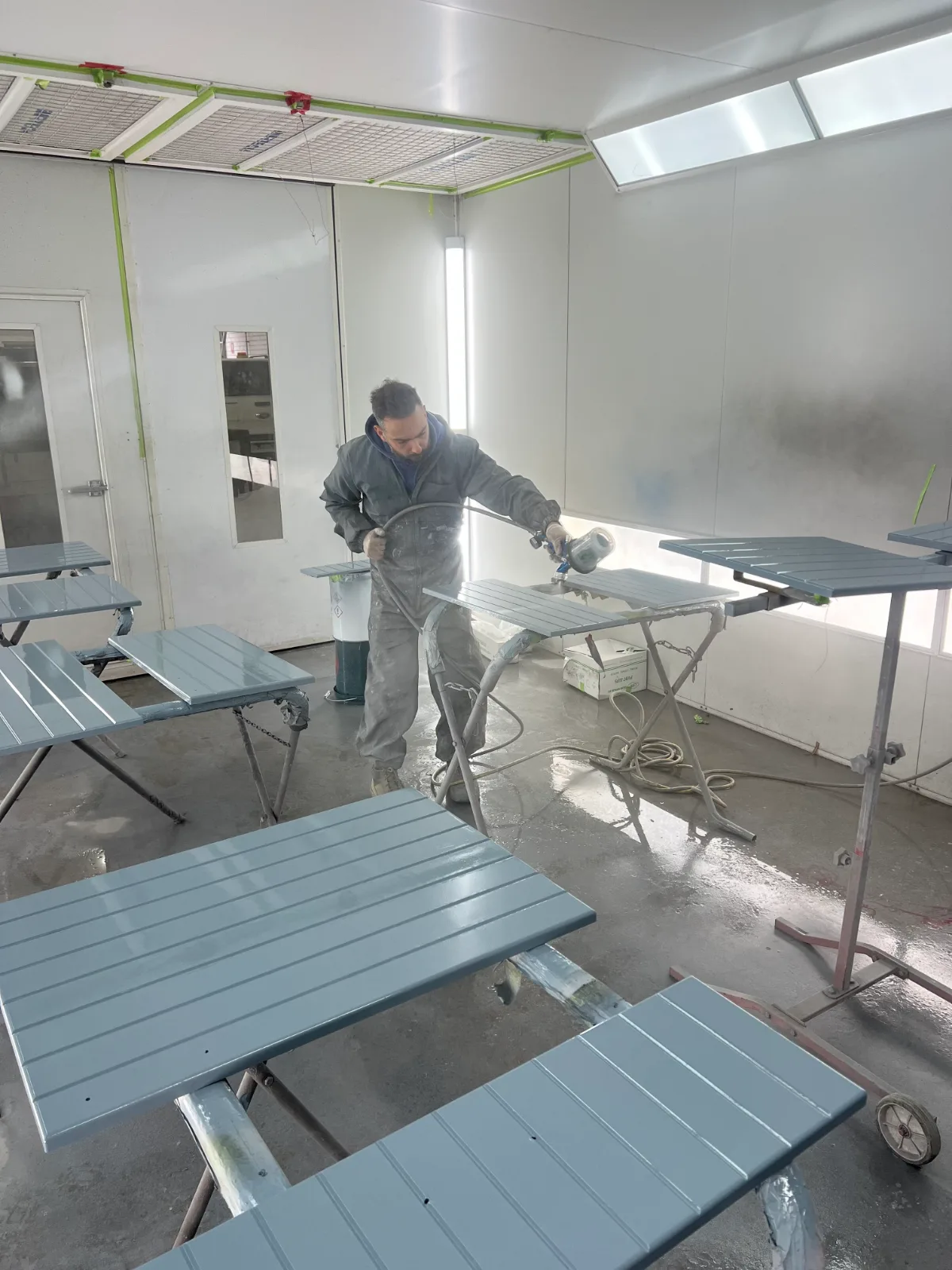
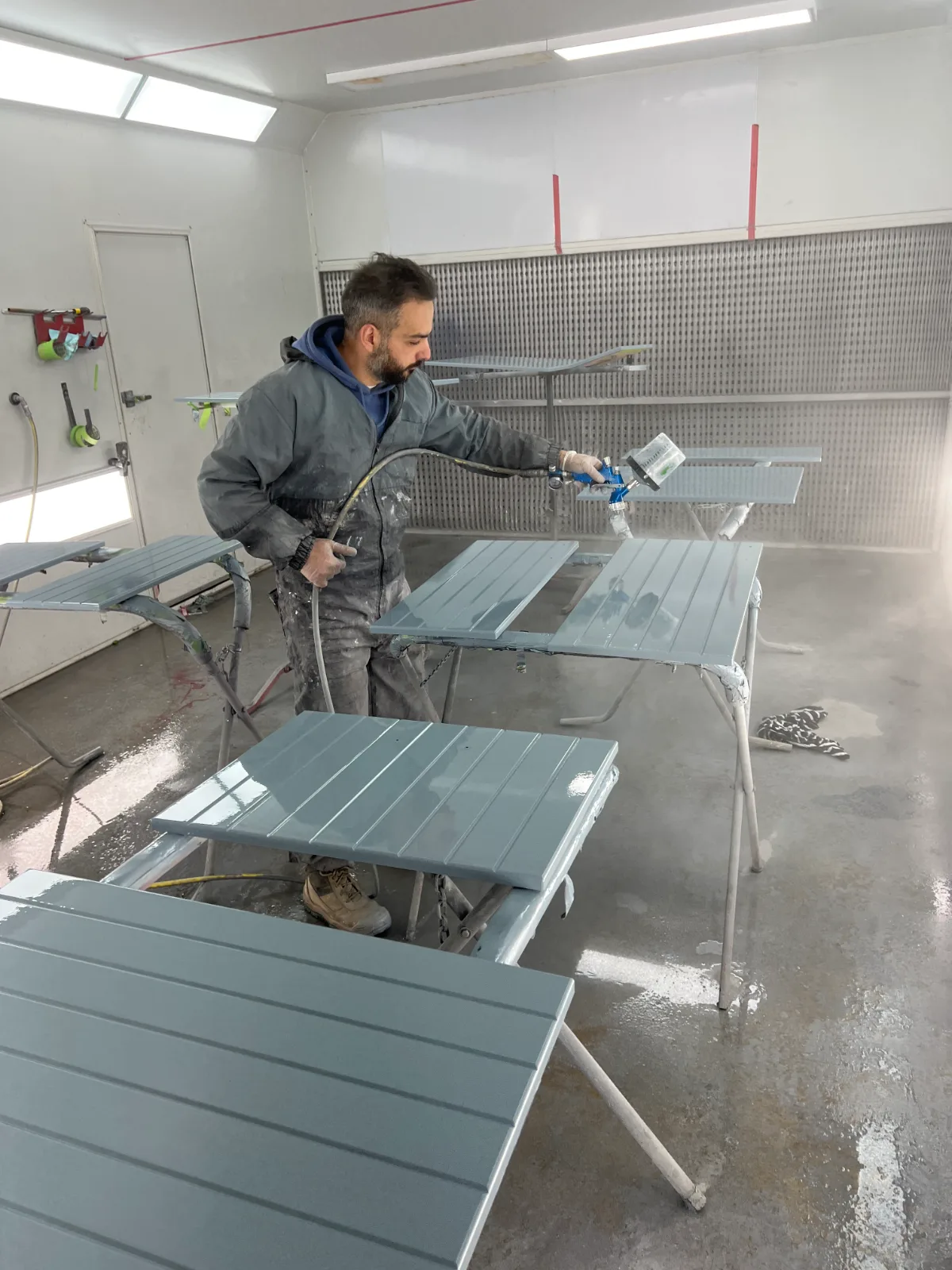
How it goes on matters as much as what goes on. Doors, drawer fronts and end panels come off and are sprayed in our booth, where dust and airflow are controlled and every face can be laid flat. The carcasses and face frames that stay in your kitchen are masked and sprayed on site. Preparation is where the job is won or lost. Every surface is degreased first. Years of cooking residue is the single most common reason cabinet paint fails to stick. Surfaces are then sanded to a key and primed with an adhesion primer matched to the substrate underneath.
Choosing colour, sheen and hardware
Colour is the easy part; sheen is where people get caught out. High gloss looks spectacular in a showroom and shows every fingerprint in a real kitchen, particularly in dark colours. Satin and low-sheen hide daily handling far better while still wiping clean, which is why they suit most family kitchens. If you do want gloss, it works best on the upper doors, where hands go least often.
Two-tone kitchens remain the most reliable way to modernise a dated layout — lighter uppers to keep the room feeling open, a deeper colour on the lower cabinets and the island where marks show least. Warm whites and greiges photograph well and date slowly. Strong colours are best kept to an island or a pantry door, where they can be changed later without redoing the whole kitchen.
Handles change the look more than most people expect, and swapping them is far easier while the doors are already off and in the booth. If you are planning new hardware, mention it at quoting stage. The hole spacing on new handles rarely matches the old. It is a much cleaner job to sort that out before the finish goes on than to drill through it afterwards. Colour consultation is included with every quote.
What to expect during and after the job
You keep your kitchen. The carcasses, benchtops and appliances all stay where they are, so the sink, oven and fridge remain usable while the work is going on — it's the doors and drawer fronts that leave. Expect open shelving through the middle stretch of the job, and to have the benches clear on the days the frames are being sprayed.
The schedule depends on the number of doors and the coats specified, and you get it with the quote. When the doors go back on, the finish will feel dry and look finished, but 2-pack keeps hardening for some weeks after that. It's worth being gentle in that window — wipe with a soft cloth and warm water rather than scouring pads or solvent cleaners, and avoid leaving anything pressed hard against a door face. After that it behaves like any other kitchen surface. The workmanship is covered by our 5-year written guarantee.
What Customers Say About Our Work
“Jimmy and his team were so professional and did a great job. We recently bought an older property and it needed a full repaint and the kitchen cabinets required resurfacing. We engaged Jetblack Painting and so happy we did. We are very happy with the end results, we can’t believe the transformation it has given the property. We have also received so many compliments from family and friends!”
Jacque · Google review, Jun 2026
Kitchen Cabinet Resurfacing FAQs
How much cheaper is resurfacing than a new kitchen?
Resurfacing costs substantially less than a full kitchen renovation, because the layout, carcasses and benchtops all stay in place. You're paying for preparation, materials and spraying rather than demolition, new cabinetry and multiple trades. The saving is largest in kitchens where the existing layout still works and only the surfaces look dated.
Can laminate or vinyl-wrapped cabinets be painted?
Yes. Laminate, melamine and vinyl-wrapped MDF all take a 2-pack finish once they have been degreased, sanded to a key and primed with the right adhesion primer. Vinyl-wrapped doors that have started lifting around the oven or dishwasher are among the most common kitchens we resurface — the wrap fails long before the door underneath does.
Is cabinet resurfacing the same as spray painting or refacing my cabinets?
Resurfacing and spray painting cabinets describe the same approach: the existing doors, drawer fronts and frames stay, and are cleaned, sanded, primed and finished in a sprayed 2-pack. Refacing is different. It fits new door and drawer fronts, or wraps them, over the existing cabinet boxes. Resurfacing suits cabinets whose doors are sound and only the finish is tired or dated. Refacing or replacing suits doors that are swollen, cracked or the wrong shape. We will tell you which applies at the site visit.
Are the doors sprayed in my kitchen or taken away?
Doors, drawer fronts and end panels come off and are sprayed in our booth, where dust and airflow are controlled and every face can be laid flat. The carcasses and face frames that can't be removed are masked and sprayed in place. That combination is what gives the finish its glass-smooth look instead of the texture you get from brushing everything on site.
How long does cabinet resurfacing take?
The time depends on the number of doors and drawer fronts and the coats specified, and you get the schedule with the quote. Preparation and priming take up more of that time than the topcoats do.
Can I use my kitchen while the cabinets are being resurfaced?
Yes. The carcasses, benchtops and appliances stay where they are, so the sink, oven and fridge remain usable throughout. You'll have open shelving while the doors are off, and the benches need to be clear on the days the frames are being sprayed.
Is a 2-pack finish durable in a kitchen?
Yes. 2-pack polyurethane cures chemically rather than simply drying, which leaves it hard, non-porous and genuinely wipeable — the same class of finish used on factory-made cabinetry. It stands up to daily wiping, hand contact and cooking steam far better than a brush-applied enamel.
Which sheen is best for kitchen cabinets?
Satin or low-sheen suits most kitchens. High gloss looks striking but shows fingerprints and wipe marks constantly, especially in darker colours. Satin handles daily contact far better and still wipes clean. If you want gloss, it works best on upper doors, which get touched least.
What can't cabinet resurfacing fix?
Water damage and structural problems. If the board under the sink or beside the dishwasher has swollen or gone soft, or a carcass has dropped out of square, a coating won't hide it — that section needs replacing first. Resurfacing renews the visible surfaces; it doesn't repair failed board or change the kitchen's layout.
Suburbs we service
We provide this service across Melbourne, including these areas.
Related painting services
Explore our other painting services across Melbourne.
Kitchen Cabinet Resurfacing work